Copy Paste Run

Copy Paste Run

  • PHP
  • JavaScript

Sort By:

Create a clean, digital artwork representing the concept of JavaScript hoisting, without using any text or human figures. Show a symbolic crane intertwining with generic coding symbols, lifting them skywards to represent the hoisting procedure. Predominate colors should be browns and blues, with a touch of yellow for the crane. Maintain a flat design aesthetic with minimal details but clear iconography. Exclude any brand logos or names and ensure no text appears anywhere within the design.

JavaScript Hoisting Explained

Create an image symbolizing the JavaScript programming language without featuring text, brand names, or people. The scene should depict a computer keyboard, emitting glowing rays of light to represent the 'this' keyword. The rays can take on the shape of keys, indicating their usage and importance in JavaScript programming. This image should be clear, concise, and professionally done, ensuring it is suitable for usage in any programming related article.

Understanding ‘this’ Keyword in JavaScript

An abstract representation of JavaScript code invoking an AJAX call. Include in the image various visual elements related to computer programming such as a stylized JavaScript logo, some curly braces indicative of coding blocks, a graphical representation of asynchronous data transfer. Imagine arrows in a non-linear path to suggest the async nature of AJAX. All these elements should float on a backdrop representing digital space. Remember not to include any brand logos, text, or humans in the image.

AJAX in JavaScript: Fetching Data Asynchronously

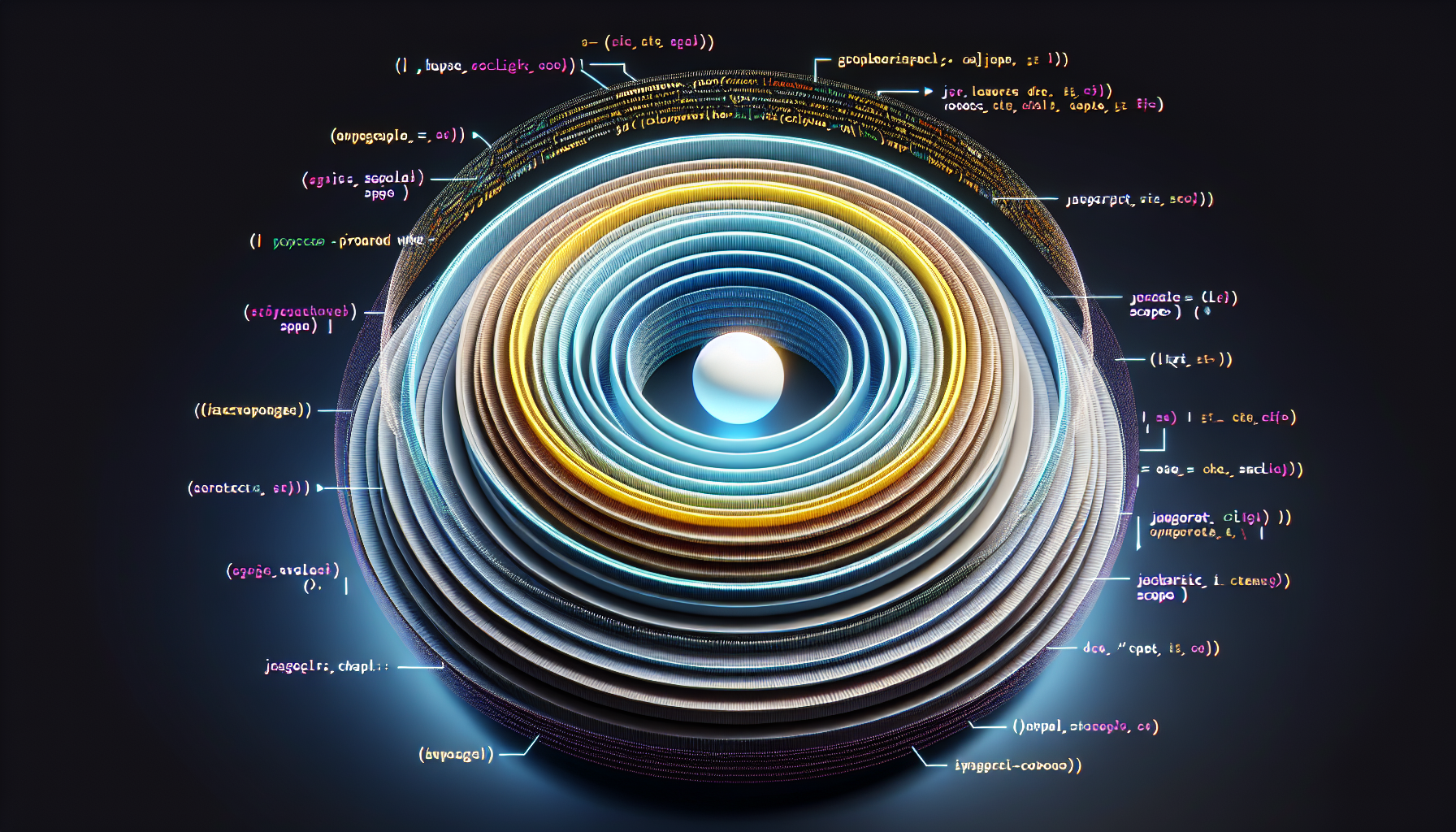
An abstract representation showcasing the concept of a JavaScript closure. Imagine a 3D floating sphere enveloped by multiple layers, each representing a different scope level. Innermost is a PNG symbol for a variable, depicting it is preserved within these scopes. Surrounding it are other JavaScript code symbols to indicate the broader concept. Make sure there are no text, humans, brand names, and logos involved in this image.

JavaScript Closures: Preserving Variable Scope

A conceptual representation reflecting error handling techniques in JavaScript. Imagine a sequence of three distinct cubes. The first cube represents the 'Try' block, embodying abstract shapes and colors notifying a testing phase. Moving on to the second cube which symbolizes the 'Catch' block, imagine it portraying trapping elements such as nets and cages, along with error signals like red lights and caution symbols. Lastly, the third cube being the embodiment of the 'Finally' block, visuals of resolution and finality like a solved puzzle or a closed book can be incorporated. All elements must be devoid of identifiable logos, brand names or text.

Error Handling in JavaScript: Try – Catch – Finally

A symbolic representation of the concept of Asynchronous JavaScript. The image illustrates three distinct symbols: one for Callbacks, represented by a retro telephone with curly cord; one for Promises, signified as an envelope sealed with a wax stamp; and one for Async/Await, symbolized by a digital hourglass with sand dropping down. The three symbols are arranged in a curved path over a binary code sea to emphasize asynchronous operations in JavaScript. A vivid color trail connects the symbols, hinting at their interconnectedness. All objects are devoid of text and brands, reflecting the client's request.

Asynchronous JavaScript: Callbacks – Promises – and Async/Await

A high-resolution graphic illustration emphasizing the theme 'Introduction to JavaScript ES6'. The scene shows a large, glowing modern laptop mid-screen that's displaying significant JavaScript ES6 features such as arrows, LET/CONST, and classes symbolically. Alongside the laptop, flat icons representing a symbol for each of these concepts: destructuring, promises, and modules, are peacefully floating in the white space. The use of a subtle color palette is preferred - bright yellow for arrows, green for LET/CONST, light blue for classes, and more subdued colors for the others. The overall design remains elegant with simple, minimalist aesthetic and no people, text, brand names or logos.

Introduction to JavaScript ES6 Features

A visually abstract representation indicative of the concept 'JavaScript String Methods'. This representation features an array of geometric shapes interplaying with each other symbolizing different steps of text manipulation. Bring in squares, triangles, and circles to signify different methods. In the center, imagine a large string symbolized by a wavy line that changes its shape or color as it interacts with these shapes, depicting the effect of those methods. Colors should be vibrant yet harmonious, setting the image in a digital, code-inspired environment. All elements are devoid of any text or brand name, keeping the image purely illustrative.

JavaScript String Methods: Manipulating Text

An abstract representation of DOM (Document Object Model) manipulation with JavaScript. The image features a stylized web page silhouette with multiple layers, illustrating the hierarchical structure of DOM elements. Each layer symbolizes different elements like headers, footers, nav tags, divs and more. Superimposed on this silhouette, there's a symbol or icon representing JavaScript implying its interaction with the elements. No text, brand names, logos, or human figures are included in this image. Instead, the focus is purely on the technical aspect of web page enhancement through JavaScript.

DOM Manipulation with JavaScript: Enhancing Web Pages

An abstract representation of object-oriented programming with JavaScript. The image portrays a variety of geometric shapes containing symbols representing properties and methods. Dark circles symbolize objects, with arrows emanating and pointing towards other circles, symbolizing methods being called on these objects. A larger rectangle encompasses smaller shapes demonstrating encapsulation in object-oriented programming. The aesthetic is neutral, minimalistic and done in shades of yellow and gray. The image is devoid of people, text, brand names, and logos.

JavaScript Objects: Properties; Methods and Object-Oriented Programming

prev
2627282930
next
Copyright © 2026
plants.
All Rights Reserved.
About
Advertisement Disclosure About Us Contact Us